




A bakery website and
order system for my wife.
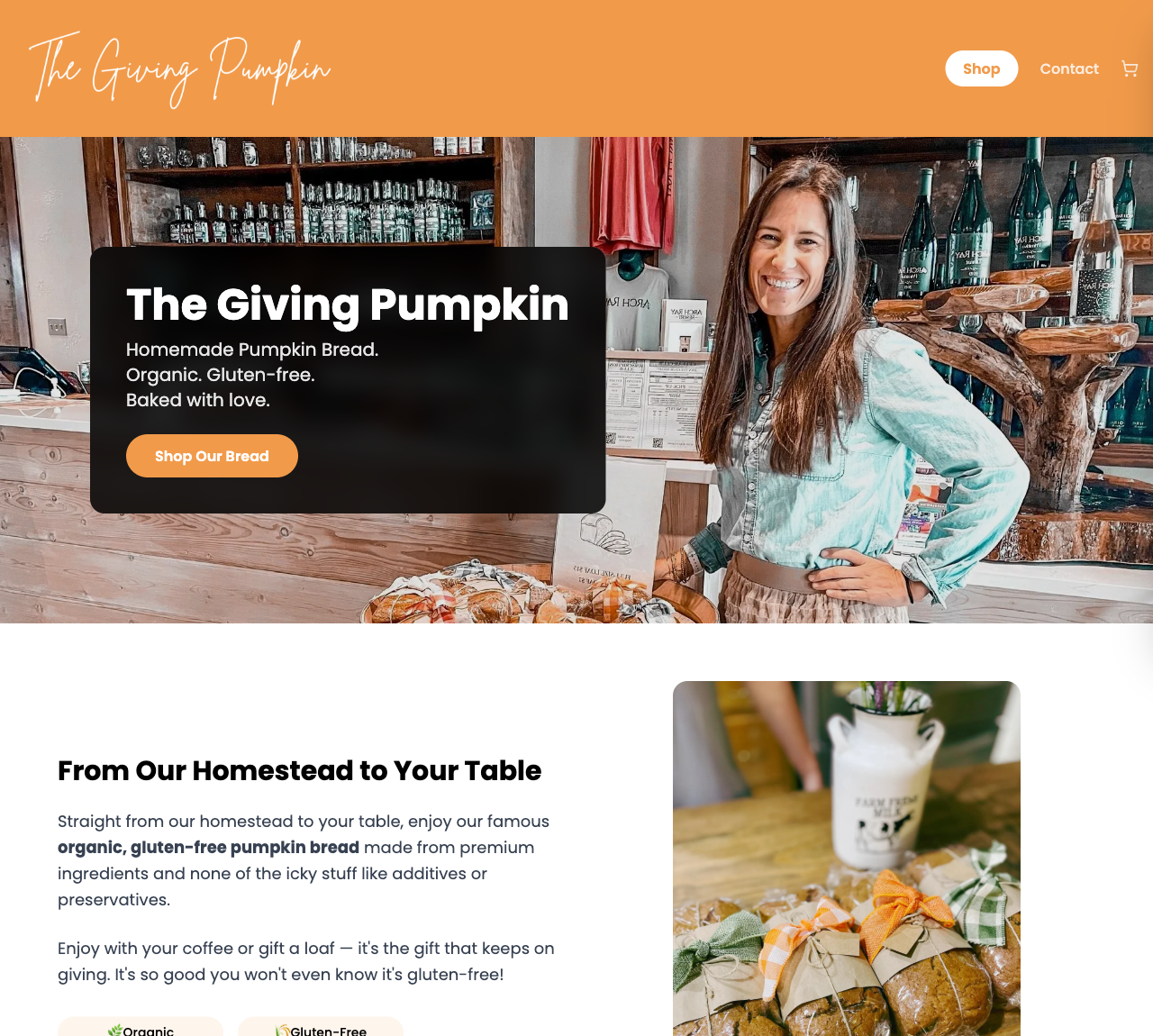
My wife Eleya runs a seasonal home bakery — organic, gluten-free pumpkin bread, hand-delivered in batches around central Texas. I built her the full stack: a clean customer-facing ordering site and a private admin system to manage orders, batch them by delivery date, track drop-off locations, and get everything delivered efficiently.
every order
Built for my wife's bakery
Every fall, my wife Eleya bakes pumpkin bread. Organic, gluten-free, made from scratch — and it is genuinely extraordinary. For years she'd been sharing it with friends and family, and people kept asking if they could buy it. Last year, she finally decided to turn it into a real thing: The Giving Pumpkin, a seasonal home bakery out of Lampasas, Texas.
The model is simple but logistically interesting. She bakes in batches, takes orders through a window of time before each batch, then organizes hand-deliveries across a couple of drop-off locations — Lampasas and the Austin/Cedar Park area. A Facebook post alone wasn't going to cut it for managing that flow. She needed something real.
"She needed a way to take orders. I needed a weekend project. It was a perfect fit."
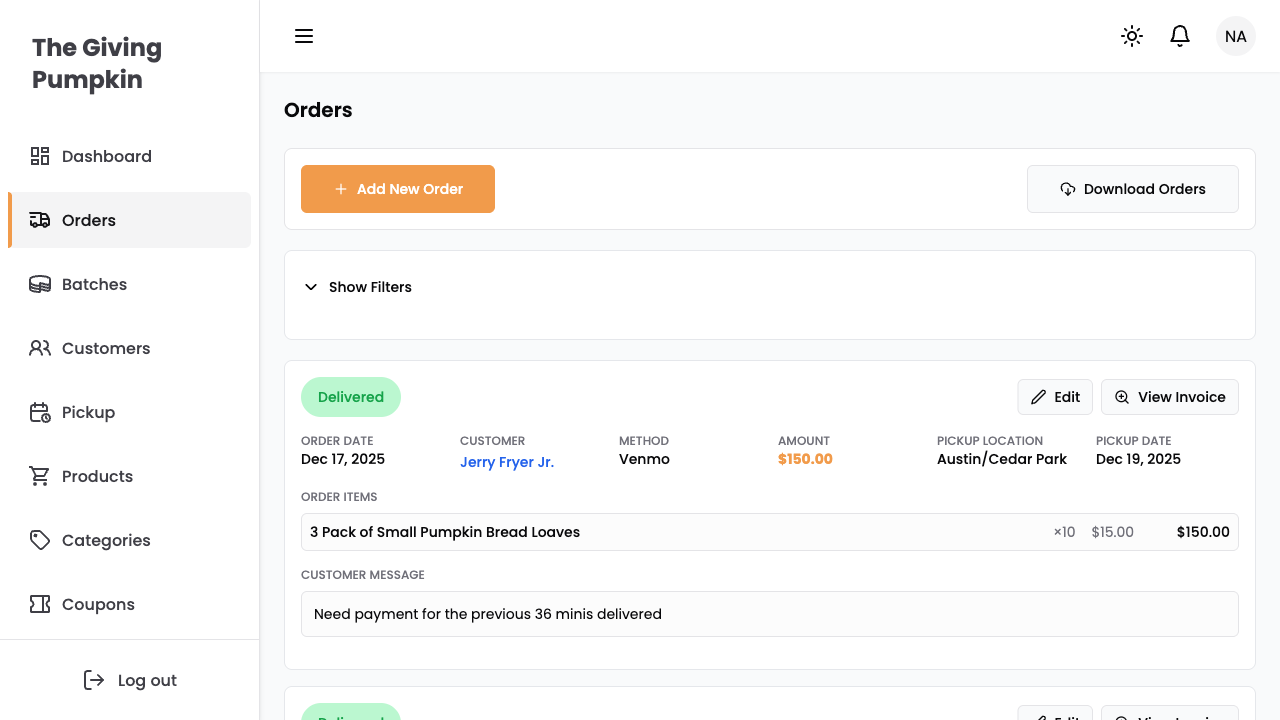
So I built her a website and a full backend admin system. The public site handles customer orders, cart checkout, and collects contact info. The admin system — which only we can access — gives Eleya and me a full view of every order, lets us group them into delivery batches, manage drop-off locations, and track which orders have been delivered. It turns what would have been a logistical nightmare into something actually manageable.
The name comes from the mission: 10% of every sale goes to Carry Them Ministries in Nigeria, an organization that provides nutritional support to severely malnourished infants and their families. The bread is the product; the giving is the point.
Two systems, one operation
The public site handles customer orders. The admin backend handles everything that happens after.
The Customer Website
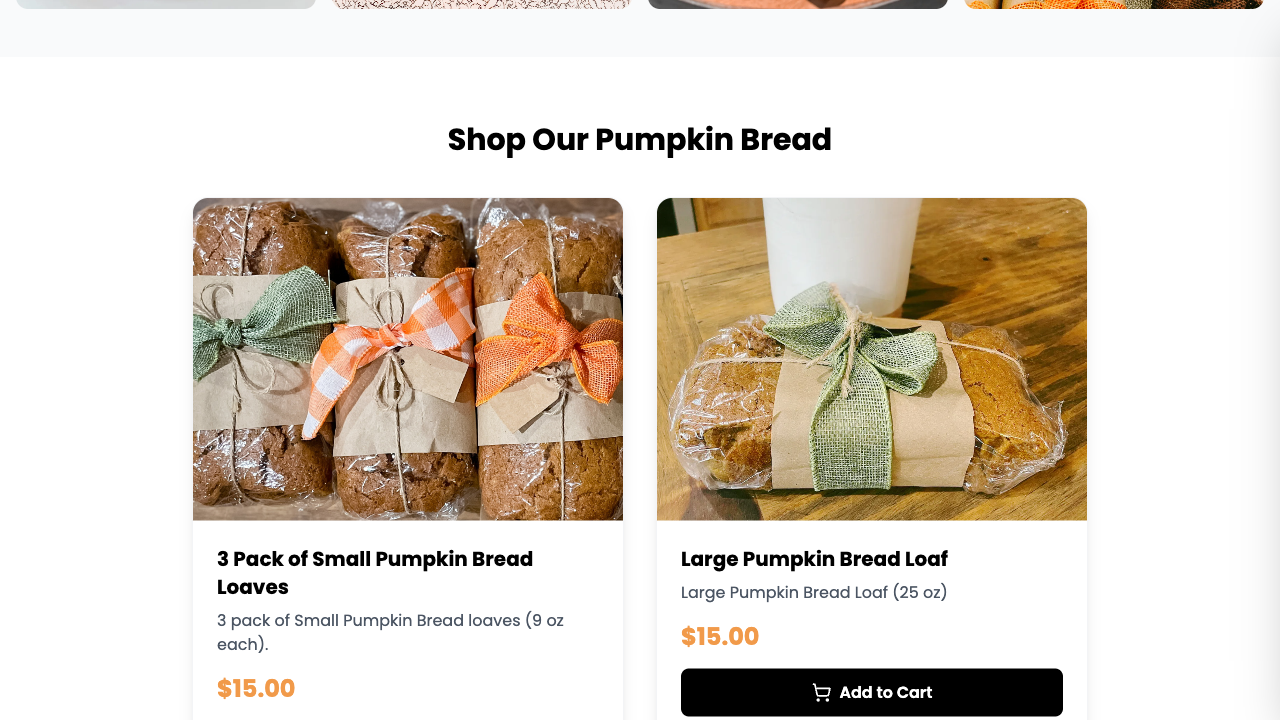
A clean, mobile-friendly storefront where customers browse products, add to cart, choose a pickup location, and check out. Orders flow straight into the admin system — no manual entry required.
- Product catalog with descriptions and pricing
- Cart checkout with pickup location selection
- Contact form for custom orders and questions
- Charity mission and Carry Them Ministries spotlight
The Admin Backend
A private dashboard with complete visibility into orders and logistics. Built specifically for the batch-and-deliver model — not a generic CMS, but something purpose-built for how this business actually works.
- Orders dashboard with full history and status tracking
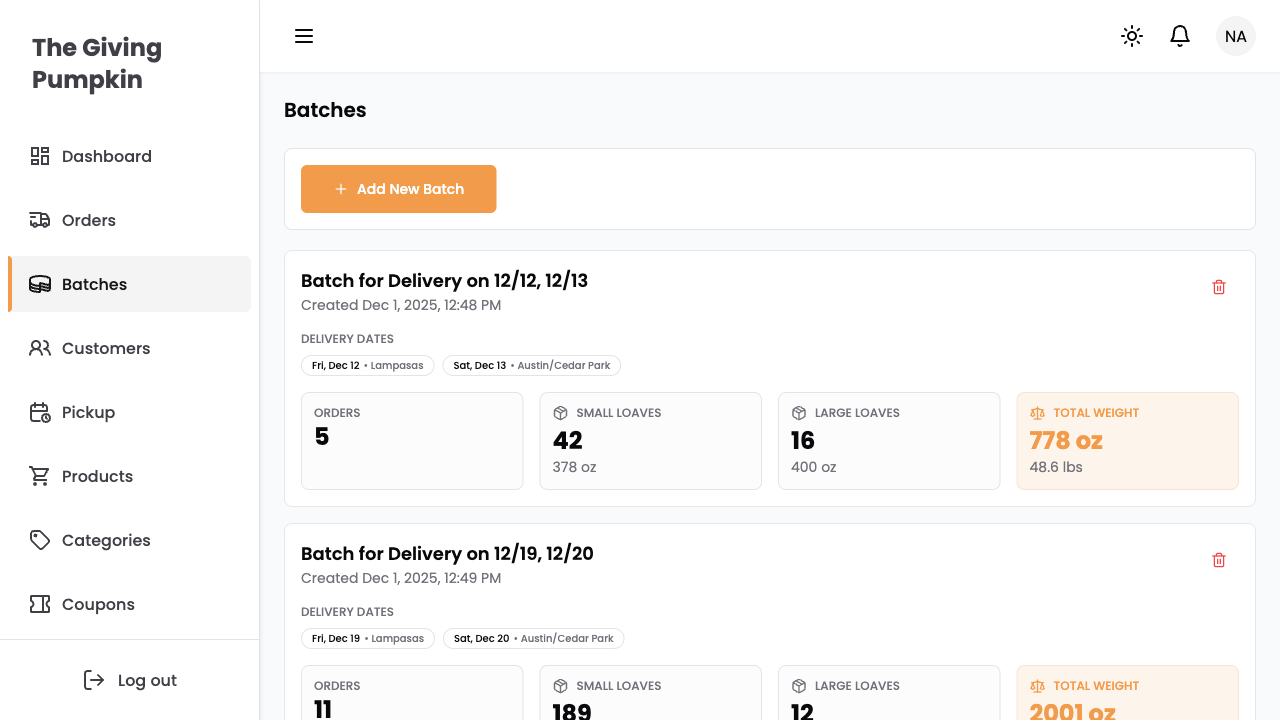
- Batch management — group orders by delivery date and location
- Auto-calculated bake totals per batch (loaves, weight in oz/lbs)
- Customer management, coupons, and staff access
Why batching matters
Pumpkin bread isn't baked on demand — it's baked in runs. Eleya sets a delivery window, collects orders, then bakes everything for that window in one big session. A batch might be 125+ pounds of bread across a dozen orders, going to two different drop-off locations on two different days.
The batch system is what makes this manageable. When she opens orders for a new baking window, I create a batch in the admin and assign it delivery dates and locations. As orders come in through the website, I assign each one to the appropriate batch. The system automatically totals the loaf count and weight — so Eleya knows exactly how much to bake before she starts.
"She just needs to know: how many loaves, how much does that weigh, and where does it all go. The system gives her that in seconds."
The December 2025 batch had 11 orders totaling 189 small loaves and 12 large loaves — 125 pounds of bread across two delivery dates. Without the system, that's a spreadsheet problem. With it, it's a glance.
One stack, two audiences
I used SvelteKit for the full application — both the public customer site and the private admin dashboard live in the same codebase, separated by route groups. Supabase handles the database, auth, and real-time data. The whole thing runs on Vercel. I already knew this stack well from building my own portfolio site (this one), so the main challenge was designing the data model, not learning new tools.
What was hard
Building for a non-technical user
Eleya is not a developer, and the admin system needs to work for her without any coaching from me. That meant every workflow had to be obvious — creating a batch, adding orders to it, marking things delivered. The first version had too many steps and too many modals. I simplified it significantly after watching her actually use it.
The batch-delivery data model
A "batch" in this business is not just a grouping of orders — it has multiple delivery dates, each tied to a specific pickup location. Getting the relational model right so that the batch page could accurately summarize bake quantities, sorted by delivery date and location, required more schema iteration than I expected. The first model was too flat.
Building it fast during a busy season
I built this in the weeks before Eleya's first selling season — Thanksgiving and Christmas. There wasn't time to iterate slowly. I had to ship something fully functional before orders started coming in, which meant making pragmatic calls about what the first version would and wouldn't do. A few features I refined as real orders came in during the active season.
Growing with the business
The first season went well. Eleya sold 36 orders totaling $2,325, all hand-delivered across two batches. Every order was placed through the website and managed through the admin system — the whole thing worked exactly as intended.
The roadmap is driven entirely by what Eleya actually needs as the business grows. I'm not adding features for the sake of it — everything I build next has to solve a real problem she's running into.
Current status
- Public website live at givingpumpkin.com
- Admin order & batch management system operational
- First season complete — 36 orders, $2,325 in sales
- Online payment integration — in consideration
- SMS/email notifications for order updates — planned
- Materials calculator — break a batch's total bread volume down into exact ingredient quantities needed
Homemade pumpkin bread.
Baked with love.
Organic. Gluten-free. Seasonal. And 10% goes to feed malnourished infants in Nigeria.