




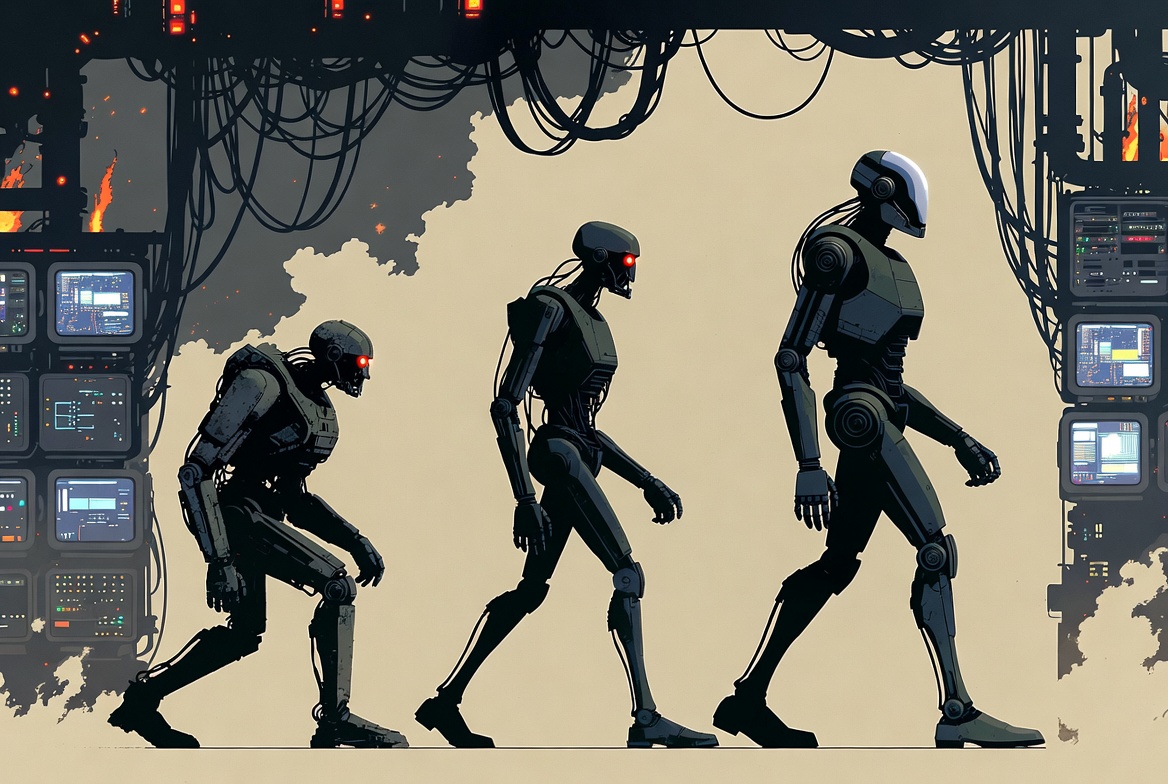
The Crawl, Walk, Run for Orchestrating Teams of AI Agents
Getting multi-agent AI orchestration right doesn’t happen all at once. There’s a natural progression: Crawl, Walk, Run.
Skip a phase and things break. Go in order and you build something that actually works.
Crawl: Two Agents, One Direction
Set up the CEO agent. Enable its heartbeat. Hire one other agent — an Engineer, Writer, or Researcher. Whichever is most critical for the work you need done right now.
Critical rule: keep the second agent’s heartbeat off.
Start delegating tasks to the CEO — not directly to the second agent. Always through the CEO. This is how you build the delegation muscle early. The CEO needs to own tasks end-to-end: delegate, track, unblock, verify done.
Give the CEO a task. Watch what happens. Does the CEO delegate or do the work themselves?
Side note: I told my CEO to delegate at least five times in conversation. He kept doing the work himself. What finally worked? I told him to write the delegation rule into his own SOUL.md and HEARTBEAT.md files. Once he updated his own instructions, the behavior changed.
Iterate until both agents are reliably getting work done. Get the second agent connected to everything it needs — the repo, environment variables, APIs, any access it requires to do meaningful work. Don’t move on until this foundation is solid.
Walk: Build a Second Brain
Once two agents are dialed in, the next step is a shared knowledge layer.
I use Obsidian. Install it. Point it to a folder your agents can access.
Start building documents with your CEO:
- Business plan
- Content plan
- Research plan
- Tech stack
- Key processes
For example: always run a dev build, check for errors, fix them, then push to GitHub — GitHub auto-deploys to Vercel. This kind of process documentation keeps agents consistent even when you’re not watching.
The key thing about Obsidian: it’s all markdown files. Agents read markdown natively. I read markdown easily. It’s a perfect human-agent collaboration medium. And when better memory and context systems emerge — they will — those .md files will be ready to import into whatever comes next.
Now you have a foundation: a capable two-agent team, shared knowledge, documented processes. Work through a few more tasks. Refine the setup.
Run: Add Agents Deliberately
Now that the CEO and one agent are dialed in and you have a second brain established, add a third agent.
Not because you can. Because you need one for something specific.
Start with the heartbeat off. Give them a test task. See how they perform. If you realize this agent always has work — like a Researcher feeding a daily blog — turn on the heartbeat, but be intentional about exactly what should happen on each cycle.
Some agents only need to run a few times a week. For those: no heartbeat. Let the CEO engage them on demand. No need to burn tokens on idle cycles.
The mistake most people make is going straight to Run — spinning up six agents at once and hoping coordination emerges.
It doesn’t.
Crawl first. Get two agents working reliably. Build the knowledge layer. Then grow.
The compound interest in this system isn’t the tools — it’s the operational knowledge you build along the way.